Unit 4: Communication Notes
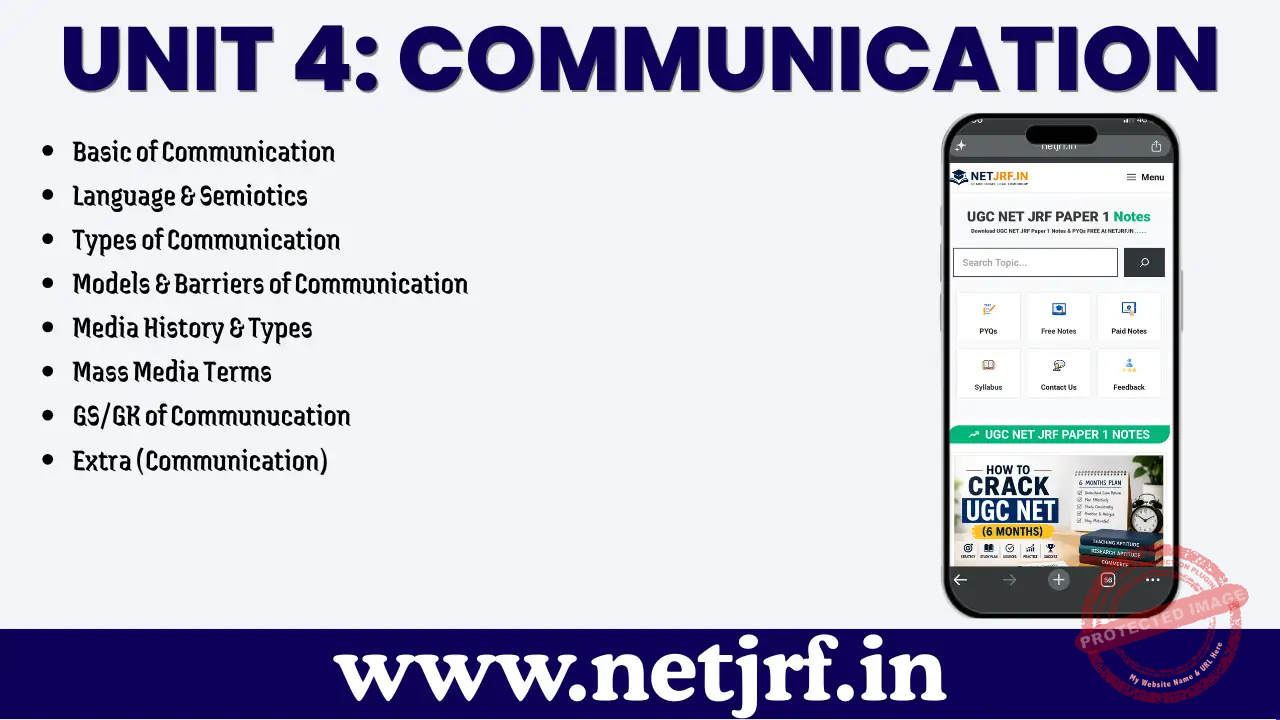
Complete bilingual notes covering all 8 topic areas of Communication — Basics, Language & Semiotics, Types of Communication, Models & Barriers, Mass Media History & Types, Mass Media Terms, General/SK Concepts, and Extras.
Communication – Basics
Communication and its Characteristics
Communication is the process of exchanging information, ideas, thoughts, or feelings between two or more parties so that both the sender and receiver arrive at a shared understanding. It flows through a medium — speech, writing, gestures, or visuals.
Key characteristics of communication:
- Two-way process — it involves both sending and receiving, with feedback flowing back to the sender.
- Continuous and dynamic — it keeps evolving as people respond and adjust to each other.
- Uses a shared system of symbols — language, gestures, or signs only work when both sides understand the same code.
- Goal-directed — every act of communication serves a purpose: to inform, persuade, instruct, or express emotion.
- Context-dependent — the same words can mean different things depending on setting, culture, and relationship.
- Verbal and non-verbal — words carry explicit content, while tone, posture, and expression carry implicit meaning.
संचार (Communication) दो या दो से अधिक पक्षों के बीच सूचना, विचार या भावनाओं के आदान-प्रदान की प्रक्रिया है, जिसका उद्देश्य प्रेषक और प्राप्तकर्ता दोनों के बीच एक साझा समझ तक पहुँचना है। यह किसी माध्यम — भाषण, लेखन, हावभाव या दृश्यों — के ज़रिए प्रवाहित होता है।
संचार की मुख्य विशेषताएँ:
- द्विदिश प्रक्रिया — इसमें भेजना और प्राप्त करना दोनों शामिल हैं, फीडबैक वापस प्रेषक तक पहुँचता है।
- निरंतर और गतिशील — जैसे-जैसे लोग प्रतिक्रिया देते और समायोजित होते हैं, यह विकसित होता रहता है।
- साझा संकेत-प्रणाली का उपयोग — भाषा, हावभाव या संकेत तभी काम करते हैं जब दोनों पक्ष एक ही कोड समझते हों।
- उद्देश्यपूर्ण — हर संचार कार्य किसी उद्देश्य की पूर्ति करता है — सूचित करना, समझाना, निर्देश देना या भावना व्यक्त करना।
- संदर्भ-निर्भर — परिवेश, संस्कृति और संबंध के अनुसार एक ही शब्द के अलग-अलग अर्थ हो सकते हैं।
- मौखिक और अमौखिक — शब्द स्पष्ट सामग्री देते हैं, जबकि लहज़ा, मुद्रा और भाव-भंगिमा अंतर्निहित अर्थ देते हैं।
Classroom Communication
Classroom communication is the exchange of information, instructions, and ideas between teacher and students, and among students themselves, during the teaching-learning process. Effective classroom communication pairs verbal explanation with non-verbal cues — tone of voice, eye contact, gestures, and the use of the board or visual aids — to hold attention and support understanding.
Key forms of classroom communication:
- Teacher-to-student — lectures, instructions, and feedback.
- Student-to-teacher — questions, doubts, and responses.
- Student-to-student — group discussions and peer learning.
Common barriers in a classroom: large class size, noise and distractions, language gaps between teacher and learners, and low learner engagement. Teachers can reduce these by simplifying language, combining visual and verbal channels, encouraging questions, and regularly checking for understanding.
कक्षा संचार शिक्षण-अधिगम प्रक्रिया के दौरान शिक्षक और छात्रों के बीच, और छात्रों के आपस में, सूचना, निर्देशों और विचारों का आदान-प्रदान है। प्रभावी कक्षा संचार मौखिक व्याख्या के साथ अमौखिक संकेतों — आवाज़ का लहज़ा, नेत्र-संपर्क, हावभाव, और बोर्ड या दृश्य सामग्री का उपयोग — जोड़ता है ताकि ध्यान बना रहे और समझ में मदद मिले।
कक्षा संचार के मुख्य रूप:
- शिक्षक से छात्र — व्याख्यान, निर्देश और फीडबैक।
- छात्र से शिक्षक — प्रश्न, शंकाएँ और उत्तर।
- छात्र से छात्र — समूह चर्चा और सहपाठी शिक्षण।
कक्षा में सामान्य बाधाएँ: बड़ी कक्षा का आकार, शोर और ध्यान भटकाव, शिक्षक व छात्रों के बीच भाषा का अंतर, और कम जुड़ाव। शिक्षक भाषा सरल रखकर, दृश्य व मौखिक दोनों माध्यमों का उपयोग करके, प्रश्नों को प्रोत्साहित करके, और नियमित रूप से समझ जाँच कर इन्हें कम कर सकते हैं।
Communication – Common Sense Questions
This area is less about formal definitions and more about applying communication concepts with everyday judgment — the kind of practical reasoning UGC NET often tests through situation-based questions.
Practical principles worth remembering:
- Choose the channel to fit the message — a sensitive matter calls for a face-to-face conversation, not a text.
- Match your tone and formality to the audience and setting.
- Listen actively before responding — understanding must come before persuading.
- Treat non-verbal cues (tone, expression, silence) as carrying as much meaning as the words themselves.
- Confirm your message was understood, not just delivered, by inviting feedback.
यह भाग औपचारिक परिभाषाओं से अधिक रोज़मर्रा की समझ के साथ संचार अवधारणाओं को लागू करने के बारे में है — इस तरह का व्यावहारिक तर्क UGC NET अक्सर परिस्थिति-आधारित प्रश्नों के ज़रिए परखता है।
याद रखने योग्य व्यावहारिक सिद्धांत:
- संदेश के अनुसार माध्यम चुनें — संवेदनशील बात के लिए आमने-सामने बातचीत उचित है, टेक्स्ट संदेश नहीं।
- अपने लहज़े और औपचारिकता को श्रोता और परिवेश के अनुसार ढालें।
- प्रतिक्रिया देने से पहले सक्रियता से सुनें — समझना, समझाने से पहले आना चाहिए।
- अमौखिक संकेतों (लहज़ा, भाव, मौन) को शब्दों जितना ही महत्वपूर्ण मानें।
- फीडबैक माँग कर सुनिश्चित करें कि संदेश सिर्फ़ भेजा नहीं, समझा भी गया।
Language and Semiotics
Semiotics, Sign and Symbols
Semiotics is the branch of study concerned with signs and symbols — how they are used and how people interpret them. It looks at the different sign systems through which meaning is built and passed on.
In any act of communication, three building blocks work together to carry a message: signs, symbols, and codes.
A sign is broadly anything — a word, picture, sound, gesture, or object — that points to something beyond itself.
A symbol is a specific kind of sign whose meaning isn’t natural or automatic; it is fixed by culture and has to be learned, which is why symbols tend to be more abstract.
A code is the rulebook — an agreed set of conventions a community follows so that signs are consistently understood by everyone using that system.
सांकेतिकी (Semiotics) अध्ययन की वह शाखा है जो संकेतों और प्रतीकों से जुड़ी है — वे कैसे इस्तेमाल होते हैं और लोग उन्हें कैसे समझते हैं। यह उन विभिन्न संकेत-प्रणालियों को देखती है जिनके ज़रिए अर्थ गढ़ा और आगे पहुँचाया जाता है।
किसी भी संचार कार्य में तीन मूल तत्व मिलकर संदेश को आगे बढ़ाते हैं: संकेत, प्रतीक, और कोड।
संकेत (Sign) मोटे तौर पर वह कुछ भी है — शब्द, चित्र, ध्वनि, हावभाव या वस्तु — जो अपने से परे किसी और चीज़ की ओर इशारा करता है।
प्रतीक (Symbol) एक खास तरह का संकेत है जिसका अर्थ स्वाभाविक या स्वतः नहीं होता; यह संस्कृति द्वारा तय होता है और इसे सीखना पड़ता है, इसीलिए प्रतीक अक्सर अमूर्त होते हैं।
कोड (Code) वह नियम-पुस्तिका है — सहमत परंपराओं का सेट जिसे कोई समुदाय अपनाता है ताकि उस प्रणाली का उपयोग करने वाला हर व्यक्ति संकेतों को एक जैसे समझ सके।
Theories in Semiotics
John Locke (1632–1704), the English philosopher, laid early groundwork for semiotics through his work on epistemology. He treated words as arbitrary linguistic signs standing in for ideas in the mind, and described language itself as a system of signs that lets people share thoughts with one another.
Charles Sanders Peirce built one of the most influential theories of signs in philosophy. For Peirce, a sign is anything that stands in for something else, and every sign works through three connected parts: the Sign/Representamen (the form the sign takes — a word, image, or gesture), the Object (what that sign points to in reality), and the Interpretant (the meaning a person draws from it). A traffic signal illustrates this neatly: the red light itself is the Representamen, the rule “Stop” it refers to is the Object, and a driver’s understanding that they must halt is the Interpretant.
Peirce also grouped signs into three types based on how they relate to their object: an Icon resembles what it represents (a photo of a cat looks like a cat); an Index has a direct, causal link to its object (smoke as evidence of fire); and a Symbol carries a meaning fixed purely by convention, with no natural resemblance (the word “tree” has no inherent connection to actual trees — its meaning is learned through language).
Ferdinand de Saussure, a Swiss linguist, took a different route with a two-part (dyadic) model rather than Peirce’s three-part one. For Saussure, a sign is made of a signifier (the form — a word, sound, or image) and a signified (the concept it evokes). In the word “tree,” the signifier is the sound/spelling “tree,” while the signified is the mental picture of a tree it brings to mind. Saussure’s key claim — that the link between signifier and signified is arbitrary, fixed only by convention — became a founding idea of structuralism and modern linguistics.
Roman Jakobson later extended semiotic thinking into linguistics and communication studies, breaking communication down into six components: the Sender (who creates the message), the Receiver (who interprets it), the Message (the content itself), the Code (the shared language/system used to encode it), the Medium/Channel (how it’s transmitted — speech, writing, media), and the Context (the surrounding situation that shapes meaning).
अंग्रेज़ दार्शनिक जॉन लॉक (1632–1704) ने ज्ञानमीमांसा पर अपने काम के ज़रिए सांकेतिकी की शुरुआती नींव रखी। उन्होंने शब्दों को मनमाने भाषाई संकेत माना जो मन के विचारों का प्रतिनिधित्व करते हैं, और भाषा को ऐसी संकेत-प्रणाली बताया जो लोगों को आपस में विचार साझा करने देती है।
चार्ल्स सैंडर्स पीयर्स ने दर्शनशास्त्र में संकेतों का सबसे प्रभावशाली सिद्धांत गढ़ा। पीयर्स के अनुसार संकेत वह है जो किसी और चीज़ की जगह खड़ा होता है, और हर संकेत तीन जुड़े हुए हिस्सों से काम करता है: संकेत/प्रतिनिधित्व (Representamen) (संकेत जो रूप लेता है — शब्द, छवि या इशारा), वस्तु (Object) (जिसकी ओर संकेत इशारा करता है), और व्याख्या (Interpretant) (व्यक्ति द्वारा निकाला गया अर्थ)। ट्रैफ़िक सिग्नल इसे अच्छी तरह दर्शाता है: लाल बत्ती स्वयं Representamen है, “रुको” का नियम Object है, और चालक की यह समझ कि उसे रुकना है, Interpretant है।
पीयर्स ने संकेतों को उनकी वस्तु से संबंध के आधार पर तीन प्रकारों में बाँटा: चिह्न (Icon) जो अपनी वस्तु से मिलता-जुलता है (बिल्ली की तस्वीर बिल्ली जैसी दिखती है); सूचक (Index) जिसका अपनी वस्तु से सीधा, कारणात्मक संबंध होता है (आग के प्रमाण के रूप में धुआँ); और प्रतीक (Symbol) जिसका अर्थ केवल परंपरा से तय होता है, कोई स्वाभाविक समानता नहीं (“पेड़” शब्द का असली पेड़ों से कोई स्वाभाविक संबंध नहीं — इसका अर्थ भाषा से सीखा जाता है)।
स्विस भाषाविद् फर्डिनेंड डी सॉसर ने पीयर्स के त्रि-भाग मॉडल के बजाय एक द्वि-भाग (dyadic) मॉडल अपनाया। सॉसर के अनुसार संकेत संकेतक (Signifier) (रूप — शब्द, ध्वनि या छवि) और संकेतित (Signified) (जो अवधारणा वह जगाता है) से मिलकर बनता है। “पेड़” शब्द में, संकेतक है ध्वनि/वर्तनी “पेड़”, जबकि संकेतित है पेड़ की वह मानसिक छवि जो मन में उभरती है। सॉसर का मुख्य दावा — कि संकेतक और संकेतित के बीच संबंध मनमाना है, केवल परंपरा से तय — संरचनावाद और आधुनिक भाषाविज्ञान की नींव बना।
रोमन जैकबसन ने सांकेतिक सोच को भाषाविज्ञान और संचार अध्ययन तक विस्तृत किया, संचार को छह घटकों में बाँटते हुए: प्रेषक (संदेश बनाने वाला), प्राप्तकर्ता (व्याख्या करने वाला), संदेश (सामग्री स्वयं), कोड (एन्कोड करने के लिए साझा भाषा/प्रणाली), माध्यम/चैनल (प्रसारण का तरीका — भाषण, लेखन, मीडिया), और संदर्भ (आसपास की स्थिति जो अर्थ को आकार देती है)।
Types of Communication
Verbal and Non-verbal
Verbal communication relies on words — spoken or written — to convey information. Non-verbal communication relies on body language, facial expressions, gestures, and visual cues to communicate without words.
Verbal communication tends to work better for complex, detailed ideas, whereas non-verbal communication often carries emotion and attitude most clearly — the two reinforce each other, and a verbal message backed by consistent non-verbal signals lands with more impact.
Verbal communication is relatively fixed and structured, while non-verbal communication shifts from culture to culture and depends heavily on context — which is why it’s sometimes called unstructured or symbolic. Non-verbal cues can even replace words entirely: a facial expression alone can say more than a sentence could, and audiences often trust non-verbal signals more than verbal ones when the two conflict.
Non-verbal communication typically shows up through four channels:
- Body language (kinesics)
- Distance (proxemics)
- Voice qualities (paralanguage)
- Touch (haptics)
Kinesics specifically is the study of how the body communicates — posture, gestures, facial expressions, and other physical behaviour — and it can reveal a person’s social standing, level of engagement, and emotional state.
Meta-communication is the “message about the message” — it’s about how information is meant to be read, not just what was literally said. The same words paired with different meta-communication (tone, expression, timing) can end up meaning something completely different, even the opposite, as happens with irony. Saying “Glad to see you” while rolling your eyes won’t come across as genuine warmth. A modern example: texting “K” instead of “okay” in response to a plan can read as annoyance, even if it was typed in a hurry — showing how much interpretation rides on cues beyond the literal words.
मौखिक संचार जानकारी देने के लिए शब्दों — बोले या लिखे — पर निर्भर करता है। अमौखिक संचार शब्दों के बिना संवाद के लिए शारीरिक भाषा, चेहरे के भाव, हावभाव और दृश्य संकेतों पर निर्भर करता है।
मौखिक संचार जटिल, विस्तृत विचारों के लिए बेहतर काम करता है, जबकि अमौखिक संचार अक्सर भावना और दृष्टिकोण को सबसे स्पष्ट रूप से व्यक्त करता है — दोनों एक-दूसरे को मज़बूत करते हैं।
मौखिक संचार अपेक्षाकृत स्थिर और संरचित होता है, जबकि अमौखिक संचार संस्कृति-दर-संस्कृति बदलता है और संदर्भ पर बहुत निर्भर करता है — इसीलिए इसे कभी-कभी असंरचित या प्रतीकात्मक कहा जाता है। अमौखिक संकेत शब्दों की जगह भी ले सकते हैं: अकेली चेहरे की अभिव्यक्ति एक पूरे वाक्य से ज़्यादा कह सकती है।
अमौखिक संचार आमतौर पर चार माध्यमों से प्रकट होता है:
- शारीरिक भाषा (काइनेसिक्स)
- दूरी (प्रॉक्सिमिक्स)
- आवाज़ के गुण (पैरालैंग्वेज)
- स्पर्श (हैप्टिक्स)
काइनेसिक्स विशेष रूप से यह अध्ययन है कि शरीर कैसे संवाद करता है — मुद्रा, हावभाव, चेहरे के भाव और अन्य शारीरिक व्यवहार — और यह व्यक्ति की सामाजिक स्थिति, जुड़ाव का स्तर, और भावनात्मक स्थिति भी दर्शा सकता है।
मेटा-संचार “संदेश के बारे में संदेश” है — यह इस बारे में है कि सूचना को कैसे समझा जाना है, न कि केवल शब्दशः क्या कहा गया। अलग-अलग मेटा-संचार (लहज़ा, भाव, समय) के साथ वही शब्द बिल्कुल अलग, यहाँ तक कि विपरीत अर्थ दे सकते हैं, जैसे विडंबना में होता है। “आपको देखकर खुशी हुई” कहते हुए आँखें घुमाना असली गर्मजोशी नहीं दिखाता।
Organizational Communication
Organizational communication is the flow of information within a workplace or institution — between employees, teams, and management — that keeps operations coordinated and goals aligned.
By direction, it is usually classified as:
- Downward — from management to employees (instructions, policies, goals).
- Upward — from employees to management (feedback, reports, grievances).
- Horizontal — between peers or departments at the same level (coordination, collaboration).
- Diagonal — across different levels and departments (cross-functional project communication).
It can also be Formal (official channels — memos, meetings, reports — following the organization’s hierarchy) or Informal (the “grapevine” — casual, unofficial conversations that often move information faster than formal channels, though not always accurately).
Effective organizational communication improves coordination, reduces misunderstandings, builds trust between staff and leadership, and supports faster, better-informed decision-making.
संगठनात्मक संचार किसी कार्यस्थल या संस्था के भीतर — कर्मचारियों, टीमों और प्रबंधन के बीच — सूचना का प्रवाह है, जो संचालन को समन्वित और लक्ष्यों को संरेखित रखता है।
दिशा के आधार पर इसे आमतौर पर वर्गीकृत किया जाता है:
- अवरोही (Downward) — प्रबंधन से कर्मचारियों तक (निर्देश, नीतियाँ, लक्ष्य)।
- आरोही (Upward) — कर्मचारियों से प्रबंधन तक (फीडबैक, रिपोर्ट, शिकायतें)।
- क्षैतिज (Horizontal) — समान स्तर के सहकर्मियों या विभागों के बीच (समन्वय, सहयोग)।
- विकर्ण (Diagonal) — विभिन्न स्तरों और विभागों में (क्रॉस-फंक्शनल प्रोजेक्ट संचार)।
यह औपचारिक (आधिकारिक माध्यम — मेमो, बैठकें, रिपोर्ट, संगठन के पदानुक्रम का पालन करते हुए) या अनौपचारिक (“ग्रेपवाइन” — अनौपचारिक बातचीत जो अक्सर औपचारिक माध्यमों से तेज़ी से सूचना फैलाती है, पर हमेशा सटीक नहीं होती) भी हो सकता है।
प्रभावी संगठनात्मक संचार समन्वय सुधारता है, गलतफहमियाँ कम करता है, स्टाफ़ और नेतृत्व के बीच भरोसा बनाता है, और तेज़, बेहतर सूचित निर्णय लेने में मदद करता है।
Levels of Communication
Communication can be classified by how many people are involved and how it flows.
Intrapersonal communication happens entirely within a single person — it’s the internal dialogue generated inside one’s own mind/nervous system, such as thinking things through or self-talk.
Interpersonal communication happens between people whose lives influence each other, and tends to produce a growing convergence of opinion among those involved.
Group communication involves three or more people working toward a shared goal. Mass communication sends a message to a large, largely anonymous audience through print or electronic media.
Two specific sub-types worth knowing: Transcendental communication, a form of intrapersonal communication, is communication between a person and the divine — rooted in religious belief and expressed through inner practices such as prayer. Dyadic communication, a form of interpersonal communication, is face-to-face communication between exactly two people, usually for social interaction or bonding.
Public communication (a form of mass communication) is sender-focused — one person delivering information to an audience — and is typically formal and planned in advance.
संचार को इसमें शामिल लोगों की संख्या और प्रवाह के आधार पर वर्गीकृत किया जा सकता है।
अंतर्वैयक्तिक संचार पूरी तरह एक ही व्यक्ति के भीतर होता है — यह व्यक्ति के अपने मस्तिष्क/तंत्रिका तंत्र के भीतर उत्पन्न आंतरिक संवाद है, जैसे सोच-विचार या स्वयं से बातचीत।
पारस्परिक संचार उन लोगों के बीच होता है जिनका जीवन एक-दूसरे को प्रभावित करता है, और यह शामिल लोगों के बीच विचारों में बढ़ती समानता की ओर ले जाता है।
समूह संचार में तीन या अधिक लोग साझा लक्ष्य की दिशा में काम करते हैं। जनसंचार प्रिंट या इलेक्ट्रॉनिक मीडिया के ज़रिए एक बड़े, अधिकांशतः अनाम दर्शक वर्ग तक संदेश पहुँचाता है।
दो विशेष उपप्रकार याद रखने योग्य: ट्रान्सेंडैंटल संचार, अंतर्वैयक्तिक संचार का एक रूप, व्यक्ति और ईश्वर के बीच का संचार है — धार्मिक विश्वास पर आधारित और प्रार्थना जैसी आंतरिक प्रथाओं से व्यक्त। डायडिक संचार, पारस्परिक संचार का एक रूप, ठीक दो लोगों के बीच आमने-सामने का संचार है, आमतौर पर सामाजिक जुड़ाव के लिए।
सार्वजनिक संचार (जनसंचार का एक रूप) प्रेषक-केंद्रित होता है — एक व्यक्ति दर्शकों तक जानकारी पहुँचाता है — और आमतौर पर औपचारिक व पूर्व-नियोजित होता है।
Synchronous Asynchronous
Synchronous communication happens in real time — two or more people exchange information and get feedback almost immediately. Face-to-face conversations, phone calls, video calls, live chat, and live broadcasts all fall into this category.
Asynchronous communication doesn’t require both sides to be present at the same time — replies can come later, which is why it’s sometimes described as self-paced. Newspapers, email, blog posts, podcasts, and discussion forums are typical examples.
तुल्यकालिक (Synchronous) संचार वास्तविक समय में होता है — दो या अधिक लोग सूचना का आदान-प्रदान करते हैं और लगभग तुरंत फीडबैक पाते हैं। आमने-सामने बातचीत, फ़ोन कॉल, वीडियो कॉल, लाइव चैट, और लाइव प्रसारण इसी श्रेणी में आते हैं।
अतुल्यकालिक (Asynchronous) संचार में दोनों पक्षों का एक ही समय पर मौजूद होना ज़रूरी नहीं — जवाब बाद में आ सकते हैं, इसीलिए इसे कभी-कभी स्व-गति कहा जाता है। समाचार पत्र, ईमेल, ब्लॉग पोस्ट, पॉडकास्ट, और चर्चा मंच इसके सामान्य उदाहरण हैं।
Models and Barriers
Communication Basic Model
A basic communication model is a simplified picture of how communication works — its job is to compress a genuinely complex process into a compact, teachable overview.
- Sender / Source — the person or entity that originates a message and sends it toward a receiver.
- Message — the thought, idea, or concept the source intends the receiver to take in.
- Encoding — turning that message into a form (words, symbols, images) that can be transmitted.
- Channel / Medium — the route the message travels through: written, verbal, or non-verbal.
- Decoding — the receiver’s work of interpreting and making sense of the encoded message.
- Receiver — the person the message is meant for, who decodes it to grasp the sender’s intent.
- Feedback — the receiver’s response back to the sender, showing how well the message landed.
- Noise — anything that disrupts shared meaning between sender and receiver.
- Context — the surrounding situation that shapes how a message is received (e.g., whether a remark reads as literal or sarcastic, or whether the moment calls for formal or informal language).
Types of context: Temporal (the sequence/timing of events), Social-psychological (norms within a group), Cultural (shared beliefs and values), Physical (the actual location or tangible setting), Historical (past events shaping how the present message is read), Situational (the specific circumstances around the act of communication), and Environmental (the broader physical, social, and cultural surroundings together).
बुनियादी संचार मॉडल यह दिखाने का एक सरलीकृत तरीका है कि संचार कैसे काम करता है — इसका काम एक वास्तव में जटिल प्रक्रिया को एक संक्षिप्त, समझने योग्य खाके में समेटना है।
- प्रेषक/स्रोत — वह व्यक्ति या संस्था जो संदेश उत्पन्न कर प्राप्तकर्ता तक भेजती है।
- संदेश — वह विचार या अवधारणा जिसे स्रोत प्राप्तकर्ता तक पहुँचाना चाहता है।
- एन्कोडिंग — संदेश को ऐसे रूप (शब्द, संकेत, चित्र) में बदलना जो भेजा जा सके।
- चैनल/माध्यम — संदेश जिस रास्ते से गुज़रता है: लिखित, मौखिक या अमौखिक।
- डिकोडिंग — प्राप्तकर्ता द्वारा एन्कोड किए गए संदेश की व्याख्या करना।
- प्राप्तकर्ता — वह व्यक्ति जिसके लिए संदेश है, जो स्रोत का आशय समझने के लिए उसे डिकोड करता है।
- फीडबैक — प्राप्तकर्ता की प्रेषक को वापस दी गई प्रतिक्रिया, जो बताती है कि संदेश कितना सही पहुँचा।
- शोर (Noise) — वह सब कुछ जो प्रेषक और प्राप्तकर्ता के बीच साझा अर्थ में बाधा डालता है।
- संदर्भ — वह परिवेश जो यह तय करता है कि संदेश कैसे समझा जाएगा (जैसे, कोई बात शाब्दिक है या व्यंग्यात्मक, औपचारिक भाषा चाहिए या अनौपचारिक)।
संदर्भ के प्रकार: लौकिक (घटनाओं का क्रम), सामाजिक-मनोवैज्ञानिक (समूह के भीतर मानदंड), सांस्कृतिक (साझा मान्यताएँ और मूल्य), भौतिक (वास्तविक स्थान या मूर्त परिवेश), ऐतिहासिक (अतीत की घटनाएँ जो वर्तमान संदेश की समझ को प्रभावित करती हैं), परिस्थितिजन्य (संचार क्रिया के आसपास की विशिष्ट परिस्थितियाँ), और पर्यावरणीय (व्यापक भौतिक, सामाजिक व सांस्कृतिक परिवेश एक साथ)।
Other Communication Models
Beyond the basic model, theorists have proposed broader frameworks, generally grouped into three families:
- Linear (Transmission) Models — one-way communication with no feedback loop, message-focused, best suited to persuasion or propaganda.
- Interactive Models — two-way communication, but feedback isn’t simultaneous; these also account for physical and psychological context.
- Transactional Models — two-way communication with simultaneous feedback, mostly used for interpersonal communication since sender and receiver keep swapping roles; these factor in physical, social, cultural, relational, and psychological context together.
Under the Linear family:
- Aristotle’s model (c. 300 BC) — built around five elements: speaker, speech, occasion, audience, and effect.
- Shannon–Weaver’s mathematical model (1949) — proposed by two American scholars, it maps communication onto six elements: information source, transmitter, channel, receiver, destination, and noise source.
- Berlo’s SMCR model (1960) — David Berlo’s framework built around Source, Message, Channel, and Receiver.
Under the Interactive family:
- Wilbur Schramm’s model (1954) — one of the first to treat communication as genuinely interactive rather than one-directional; a circular model stressing how central encoding and decoding are to the process.
Other notable models, chronologically:
- Harold D. Lasswell (1948) — one of the earliest, simplest models, explaining communication through a linear formula tracking how a message flows from sender to receiver.
- Theodore M. Newcomb’s ABX model (1953) — a triangular model where A is the sender, B is the receiver, and X is the topic being discussed; frames communication as an ongoing effort to maintain balance in social relationships.
- The Osgood–Schramm model (1954) — a circular model describing communication as a continuous, two-way loop where both participants act as sender and receiver at once.
- Westley and MacLean’s model (1957) — designed to describe mass communication more realistically than earlier linear models: X (real-world events) → A (the communicator who selects events, like a journalist) → C (the gatekeeper/channel that edits and filters) → B (the audience), with feedback running from the audience back to both the communicator and the channel.
बुनियादी मॉडल से आगे, विद्वानों ने व्यापक ढाँचे प्रस्तावित किए हैं, जिन्हें आमतौर पर तीन परिवारों में बाँटा जाता है:
- रैखिक (संचरण) मॉडल — फीडबैक लूप के बिना एकतरफ़ा संचार, संदेश-केंद्रित, अनुनय या प्रचार के लिए उपयुक्त।
- इंटरैक्टिव मॉडल — दो-तरफ़ा संचार, पर फीडबैक तुरंत नहीं; शारीरिक और मनोवैज्ञानिक संदर्भ को भी ध्यान में रखते हैं।
- लेन-देन (Transactional) मॉडल — तुरंत फीडबैक के साथ दो-तरफ़ा संचार, मुख्यतः पारस्परिक संचार में उपयोग, क्योंकि प्रेषक-प्राप्तकर्ता भूमिकाएँ बदलते रहते हैं; भौतिक, सामाजिक, सांस्कृतिक, संबंधपरक और मनोवैज्ञानिक संदर्भ को साथ में शामिल करते हैं।
रैखिक परिवार के अंतर्गत:
- अरस्तू का मॉडल (लगभग 300 ई.पू.) — पाँच तत्वों पर आधारित: वक्ता, भाषण, अवसर, श्रोता, और प्रभाव।
- शैनन-वीवर का गणितीय मॉडल (1949) — दो अमेरिकी विद्वानों द्वारा प्रस्तावित, छह तत्वों पर आधारित: सूचना स्रोत, ट्रांसमीटर, चैनल, रिसीवर, गंतव्य, और शोर स्रोत।
- बर्लो का SMCR मॉडल (1960) — डेविड बर्लो का ढाँचा, स्रोत-संदेश-चैनल-रिसीवर पर आधारित।
इंटरैक्टिव परिवार के अंतर्गत:
- विल्बर श्राम का मॉडल (1954) — संचार को एकतरफ़ा के बजाय वास्तव में संवादात्मक मानने वाले पहले मॉडलों में से एक; एक गोलाकार मॉडल जो एन्कोडिंग-डिकोडिंग के महत्व पर ज़ोर देता है।
कालक्रम में अन्य उल्लेखनीय मॉडल:
- हैरोल्ड डी. लैसवेल (1948) — सबसे शुरुआती, सरलतम मॉडलों में से एक, एक रैखिक फ़ॉर्मूले से संदेश के प्रवाह को समझाता है।
- थियोडोर एम. न्यूकॉम्ब का ABX मॉडल (1953) — एक त्रिकोणीय मॉडल, जहाँ A प्रेषक, B प्राप्तकर्ता, और X चर्चा का विषय है; संचार को सामाजिक संबंधों में संतुलन बनाए रखने की सतत कोशिश के रूप में देखता है।
- ऑसगुड-श्रैम मॉडल (1954) — एक गोलाकार मॉडल जो संचार को निरंतर, दो-तरफ़ा प्रक्रिया बताता है जहाँ दोनों भागीदार एक साथ प्रेषक और प्राप्तकर्ता होते हैं।
- वेस्टली और मैकलीन का मॉडल (1957) — जनसंचार को पहले के रैखिक मॉडलों से अधिक वास्तविक ढंग से समझाने हेतु डिज़ाइन किया गया: X (वास्तविक घटनाएँ) → A (घटनाओं को चुनने वाला संचारक, जैसे पत्रकार) → C (संपादन-छनाई करने वाला गेटकीपर/चैनल) → B (दर्शक), साथ ही दर्शक से संचारक और चैनल दोनों तक वापस जाने वाला फीडबैक।
Types of Communication Barriers
A communication barrier is anything that stops a receiver from getting or understanding a message properly. These barriers show up in several forms:
- Language barriers — improper or faulty language use, poor translation, or excessive jargon.
- Emotional/Psychological barriers — being judgmental or opinionated, or carrying a preconceived notion into the exchange.
- Physical barriers (noise) — poor sound quality, excessive background noise, and similar interference.
- Cultural barriers — arise when a receiver’s values, beliefs, and perceptions aren’t taken into account.
- Organizational barriers — obstacles in the flow of information among employees, which can ultimately hurt an organization’s performance.
- Technological barriers — limited access to the right hardware/software, or a breakdown in the technology being used.
- Individual/Personal barriers — personal factors on either side, sender or receiver, such as poor health or fear.
- Semantic barriers — problems arising from differing interpretations of what a word actually means.
संचार बाधा वह कुछ भी है जो प्राप्तकर्ता को संदेश को ठीक से पाने या समझने से रोकती है। ये बाधाएँ कई रूपों में दिखती हैं:
- भाषा बाधाएँ — अनुचित या दोषपूर्ण भाषा, ख़राब अनुवाद, या अत्यधिक शब्दजाल।
- भावनात्मक/मनोवैज्ञानिक बाधाएँ — आलोचनात्मक या मनमौजी होना, या पहले से बनी धारणा लेकर आना।
- भौतिक बाधाएँ (शोर) — ख़राब ध्वनि गुणवत्ता, अत्यधिक पृष्ठभूमि शोर, और इसी तरह का हस्तक्षेप।
- सांस्कृतिक बाधाएँ — तब उत्पन्न होती हैं जब प्राप्तकर्ता के मूल्यों, विश्वासों और धारणाओं को ध्यान में नहीं रखा जाता।
- संगठनात्मक बाधाएँ — कर्मचारियों के बीच सूचना-प्रवाह में रुकावटें, जो अंततः संगठन के प्रदर्शन को नुकसान पहुँचा सकती हैं।
- तकनीकी बाधाएँ — सही हार्डवेयर/सॉफ़्टवेयर तक सीमित पहुँच, या इस्तेमाल हो रही तकनीक में गड़बड़ी।
- व्यक्तिगत बाधाएँ — प्रेषक या प्राप्तकर्ता, किसी भी पक्ष के व्यक्तिगत कारक, जैसे ख़राब सेहत या डर।
- सिमेंटिक (अर्थ-संबंधी) बाधाएँ — किसी शब्द के अर्थ की अलग-अलग व्याख्या से उत्पन्न समस्याएँ।
Mass Media History and Types
Basics of Mass Media
Mass media refers to technology built to reach a mass audience — it’s the primary channel through which communication reaches the general public at scale. The most common platforms are newspapers, magazines, radio, television, and the internet.
Features of mass media: produced by trained professionals in a structured way (supporting accuracy and reliability); uses multiple channels — print, broadcast, digital; transmits rapidly, often in real time; reaches a heterogeneous audience across demographics; feedback tends to be delayed, especially in older formats like print; content is meant for public consumption; the message often gets commodified — news, entertainment, and education turned into marketable products; production is a multi-stage process (research, writing, editing, distribution); it runs on a fixed schedule; and it operates continuously, delivering a steady stream of content.
Functions of mass media: to Inform (deliver timely, factual updates), to Educate (build public knowledge), to Persuade (shape opinion and behaviour through campaigns), and to Entertain (engage audiences and offer a break from routine).
Mass communication is the broader process of transmitting information, ideas, and messages to a large audience through channels such as television, radio, newspapers, magazines, websites, and social media.
Journalism is the practice of gathering, evaluating, creating, and presenting news to the public — investigating events and stories, then distributing them through print, broadcast, or online platforms.
Types of journalism: Popular journalism targets a broad audience, often leaning toward entertainment or sensational stories. Citizen journalism is the correct term for news reporting done by ordinary citizens rather than trained professionals — a trend that grew with the internet and social media. (Note: “common journalism” is not an established term in the field.) New journalism refers to a literary, narrative style that emerged in the 1960s–70s, often carrying the journalist’s own voice and perspective.
मास मीडिया उस तकनीक को कहते हैं जिसका उद्देश्य बड़े पैमाने पर दर्शकों तक पहुँचना है — यह जनता तक बड़े स्तर पर संचार पहुँचाने का प्राथमिक माध्यम है। सबसे आम प्लेटफ़ॉर्म हैं समाचार पत्र, पत्रिकाएँ, रेडियो, टेलीविज़न और इंटरनेट।
मास मीडिया की विशेषताएँ: प्रशिक्षित पेशेवरों द्वारा संरचित ढंग से निर्मित (जो सटीकता और विश्वसनीयता सुनिश्चित करता है); प्रिंट, प्रसारण, डिजिटल — कई माध्यमों का उपयोग; अक्सर वास्तविक समय में तेज़ प्रसारण; विविध जनसांख्यिकी वाले दर्शक वर्ग तक पहुँच; फीडबैक अक्सर देर से मिलता है, खासकर प्रिंट जैसे पुराने प्रारूपों में; सामग्री सार्वजनिक उपभोग के लिए; संदेश अक्सर वस्तुकृत हो जाता है — समाचार, मनोरंजन और शिक्षा विपणन योग्य उत्पाद बन जाते हैं; उत्पादन एक बहु-चरणीय प्रक्रिया (शोध, लेखन, संपादन, वितरण); निश्चित समय-सारणी पर चलना; और निरंतर, स्थिर सामग्री-प्रवाह देना।
मास मीडिया के कार्य: सूचित करना (समयबद्ध, तथ्यात्मक जानकारी), शिक्षित करना (जनता का ज्ञान बढ़ाना), प्रेरित करना (अभियानों से राय और व्यवहार को प्रभावित करना), और मनोरंजन करना (दर्शकों को जोड़ना और दिनचर्या से राहत देना)।
जनसंचार टेलीविज़न, रेडियो, समाचार पत्र, पत्रिकाओं, वेबसाइट और सोशल मीडिया जैसे माध्यमों से बड़े दर्शक वर्ग तक सूचना, विचार और संदेश पहुँचाने की व्यापक प्रक्रिया है।
पत्रकारिता समाचार एकत्र करने, उसका मूल्यांकन करने, बनाने और जनता के सामने प्रस्तुत करने का अभ्यास है — घटनाओं और कहानियों की जाँच करके उन्हें प्रिंट, प्रसारण या ऑनलाइन माध्यमों से वितरित करना।
पत्रकारिता के प्रकार: लोकप्रिय पत्रकारिता व्यापक दर्शक वर्ग को लक्षित करती है, अक्सर मनोरंजन या सनसनीखेज कहानियों की ओर झुकाव के साथ। नागरिक पत्रकारिता प्रशिक्षित पेशेवरों के बजाय आम नागरिकों द्वारा समाचार रिपोर्टिंग के लिए सही शब्द है — इंटरनेट और सोशल मीडिया के साथ बढ़ा एक चलन। (ध्यान दें: “आम पत्रकारिता” इस क्षेत्र में मान्यता-प्राप्त शब्द नहीं है।) नई पत्रकारिता 1960-70 के दशक में उभरी एक साहित्यिक, कथात्मक शैली है, जिसमें अक्सर पत्रकार की अपनी आवाज़ शामिल होती है।
Emergence and History of Mass Media
The terms Pre-Information Age and Post-Information Age mark two broad periods in how human communication, knowledge-sharing, and technology have evolved.
The Pre-Information Age covers the period before modern information technology, when communication leaned on traditional means of knowledge transfer. Key features: dominance of oral tradition, limited access to information, the gradual print revolution, and slow information exchange.
The Post-Information Age is the current, still-unfolding period marked by the spread of information technology and digital media, reshaping how information is created, shared, and consumed. Key features: digital communication, user-generated content, a genuine data explosion, globalization, and growing personalization/customization.
Media history is also broken into distinct “media ages” — broadly a first (pre-modern) and second (post-modern) age.
The First Media Age — the Print Age (roughly 15th–20th century) began with Johannes Gutenberg’s printing press in the 1440s. Print media dominated, information travelled in a linear way, and rising literacy fed growing public awareness and education.
The Second Media Age spans the Broadcast Age, Digital Age, Social Media Age, and the emerging Post-Digital Age.
Broadcast Age (early–late 20th century) — arrived with radio in the 1920s and television in the 1950s. A small number of broadcasters produced content for a wide audience, meaning centralized control, with consumers mostly receiving rather than creating content.
Digital Age (late 20th century–present) — defined by the rise of the internet, making information easy to access and share, and giving rise to user-generated content as production shifted from centralized to decentralized.
Social Media Age (early 21st century–present) — defined by social media platforms, with emphasis on real-time communication and content made by users themselves.
Post-Digital Age (emerging) — likely to involve AR, VR, and AI, with digital media increasingly blending into physical experience and a growing focus on personalization and immersive experiences.
सूचना-पूर्व युग और सूचना-पश्चात युग शब्द मानव संचार, ज्ञान-साझाकरण और तकनीक के विकास में दो व्यापक कालखंडों को दर्शाते हैं।
सूचना-पूर्व युग आधुनिक सूचना तकनीक से पहले के काल को कवर करता है, जब संचार पारंपरिक साधनों पर निर्भर था। मुख्य विशेषताएँ: मौखिक परंपरा का प्रभुत्व, सूचना तक सीमित पहुँच, धीरे-धीरे आया प्रिंट क्रांति, और धीमा सूचना विनिमय।
सूचना-पश्चात युग वर्तमान, अभी भी विकसित हो रहा काल है जो सूचना तकनीक और डिजिटल मीडिया के प्रसार से चिह्नित है। मुख्य विशेषताएँ: डिजिटल संचार, उपयोगकर्ता-जनित सामग्री, वास्तविक डेटा-विस्फोट, वैश्वीकरण, और बढ़ता वैयक्तिकरण।
मीडिया इतिहास को भी अलग-अलग “मीडिया युगों” में बाँटा जाता है — मोटे तौर पर प्रथम (पूर्व-आधुनिक) और द्वितीय (उत्तर-आधुनिक) युग।
प्रथम मीडिया युग — प्रिंट युग (लगभग 15वीं–20वीं शताब्दी) की शुरुआत 1440 के दशक में जोहान्स गुटेनबर्ग की प्रिंटिंग प्रेस से हुई। प्रिंट मीडिया का बोलबाला रहा, सूचना रैखिक ढंग से फैली, और बढ़ती साक्षरता ने जन-जागरूकता और शिक्षा को बढ़ाया।
द्वितीय मीडिया युग में प्रसारण युग, डिजिटल युग, सोशल मीडिया युग, और उभरता पोस्ट-डिजिटल युग शामिल हैं।
प्रसारण युग (20वीं सदी की शुरुआत–अंत) — 1920 के दशक में रेडियो और 1950 के दशक में टेलीविज़न के साथ आया। सीमित प्रसारकों ने व्यापक दर्शकों के लिए सामग्री बनाई, यानी केंद्रीकृत नियंत्रण, उपभोक्ता मुख्यतः प्राप्तकर्ता ही रहे।
डिजिटल युग (20वीं सदी के अंत–वर्तमान) — इंटरनेट के उदय से परिभाषित, जिसने जानकारी सुलभ बनाई और उपयोगकर्ता-जनित सामग्री को जन्म दिया, उत्पादन केंद्रीकृत से विकेंद्रीकृत हुआ।
सोशल मीडिया युग (21वीं सदी की शुरुआत–वर्तमान) — सोशल मीडिया प्लेटफ़ॉर्म से परिभाषित, वास्तविक-समय संचार और उपयोगकर्ता-निर्मित सामग्री पर ज़ोर।
पोस्ट-डिजिटल युग (उभरता हुआ) — इसमें AR, VR, और AI जैसी तकनीकें शामिल हो सकती हैं, डिजिटल मीडिया का भौतिक अनुभवों से बढ़ता एकीकरण, वैयक्तिकरण और इमर्सिव अनुभवों पर ध्यान।
Types of Mass Media
The different forms of mass media have emerged over time, driven by technological progress and shifts in society.
Print media covers newspapers, magazines, books, and journals — newspapers in particular are sometimes described as “one-day bestsellers” given how fast their content dates. Broadcast media covers radio and television; radio is considered a cheaper, more effective way to reach non-literate audiences with educational content. New media covers interactive websites, virtual reality (VR), augmented reality (AR), and mobile apps.
Remote communication has its own evolution, moving from letters to the telegraph and beyond:
- Letters were, for centuries, the main way to communicate at a distance — used for personal, commercial, and government correspondence.
- The telegraph was the first technology to separate communication from physical transportation, effectively becoming the first “information highway.”
- The telephone pushed remote communication further by enabling real-time voice conversation over long distances.
- The internet then revolutionized the picture entirely, letting digital content reach anywhere in the world almost instantly.
मास मीडिया के विभिन्न रूप समय के साथ, तकनीकी प्रगति और सामाजिक बदलावों से प्रेरित होकर उभरे हैं।
प्रिंट मीडिया में समाचार पत्र, पत्रिकाएँ, किताबें और जर्नल शामिल हैं — समाचार पत्रों को कभी-कभी “एक दिन के बेस्टसेलर” कहा जाता है। प्रसारण मीडिया में रेडियो और टेलीविज़न शामिल हैं; निरक्षर दर्शकों तक शैक्षिक सामग्री पहुँचाने के लिए रेडियो को सस्ता और अधिक प्रभावी माना जाता है। नया मीडिया में इंटरैक्टिव वेबसाइट, VR, AR, और मोबाइल ऐप शामिल हैं।
दूरस्थ संचार का भी अपना विकास-क्रम है, पत्रों से टेलीग्राफ़ और उससे आगे तक:
- पत्र सदियों तक दूरस्थ संचार का मुख्य साधन रहे — व्यक्तिगत, वाणिज्यिक और सरकारी पत्राचार के लिए।
- टेलीग्राफ़ संचार को भौतिक परिवहन से अलग करने वाली पहली तकनीक थी, जो सूचना का पहला “राजमार्ग” बनी।
- टेलीफ़ोन ने लंबी दूरी पर वास्तविक-समय की आवाज़ बातचीत संभव कर दूरस्थ संचार को और आगे बढ़ाया।
- इंटरनेट ने पूरी तस्वीर बदल दी, डिजिटल सामग्री को दुनिया में कहीं भी लगभग तुरंत पहुँचाकर।
Public and Marketing (Common-Sense)
Mass media doesn’t just inform — it also shapes public opinion and drives marketing and advertising. This connection is often tested through applied, common-sense style questions rather than pure definitions.
- Advertising uses media channels to promote products, services, or ideas to a target audience, aiming to inform, persuade, or remind.
- Public opinion is the collective view of a population on an issue, heavily shaped by what mass media chooses to cover and how it frames that coverage.
- Target audience is the specific group a media message or campaign is designed to reach, based on age, interests, location, or need.
- Branding is the consistent use of a name, message, and visual identity across media to build recognition and trust over time.
Practical takeaway: mass media’s wide reach makes it a powerful marketing tool, but that same reach means it carries real responsibility in how it shapes public understanding.
मास मीडिया केवल सूचित ही नहीं करता — यह जनमत को भी आकार देता है और मार्केटिंग/विज्ञापन को आगे बढ़ाता है। यह संबंध अक्सर सीधी परिभाषाओं के बजाय व्यावहारिक, समझ-आधारित प्रश्नों से परखा जाता है।
- विज्ञापन उत्पादों, सेवाओं या विचारों को लक्षित दर्शकों तक पहुँचाने के लिए मीडिया माध्यमों का उपयोग करता है — सूचित करने, समझाने या याद दिलाने हेतु।
- जनमत किसी मुद्दे पर जनसंख्या का सामूहिक दृष्टिकोण है, जो मास मीडिया की कवरेज और उसके प्रस्तुतिकरण से बहुत प्रभावित होता है।
- लक्षित दर्शक वह विशिष्ट समूह है जिसके लिए कोई मीडिया संदेश या अभियान डिज़ाइन किया गया है — आयु, रुचि, स्थान या ज़रूरत के आधार पर।
- ब्रांडिंग पहचान और भरोसा बनाने के लिए मीडिया में नाम, संदेश और दृश्य पहचान का लगातार उपयोग है।
व्यावहारिक निष्कर्ष: मास मीडिया की व्यापक पहुँच इसे एक शक्तिशाली मार्केटिंग उपकरण बनाती है, पर यही पहुँच जनसमझ को आकार देने में इसकी असली ज़िम्मेदारी भी तय करती है।
Mixed Common-Sense Questions
Like the earlier common-sense section on communication, this part tests how well Mass Media concepts are applied in realistic scenarios rather than recalled as definitions.
- A story reaching millions instantly is usually digital/social media; a story reaching a small, specific interest group is narrowcasting.
- If feedback to a message is immediate, the situation is synchronous; if it’s delayed, it’s asynchronous.
- When a media house decides what does or doesn’t get published, that’s gatekeeping in action.
- A message repeated consistently to shape opinion over time is closer to propaganda than to straightforward reporting.
संचार वाले पहले “कॉमन-सेंस” भाग की तरह, यह हिस्सा भी परखता है कि मास मीडिया की अवधारणाएँ वास्तविक परिस्थितियों में कितनी अच्छी तरह लागू होती हैं, न कि केवल परिभाषाएँ याद हैं या नहीं।
- लाखों तक तुरंत पहुँचने वाली ख़बर आमतौर पर डिजिटल/सोशल मीडिया होती है; एक छोटे, विशिष्ट रुचि वाले समूह तक पहुँचने वाली ख़बर नैरोकास्टिंग है।
- अगर किसी संदेश का फीडबैक तुरंत मिलता है, तो वह तुल्यकालिक है; देर से मिलता है तो अतुल्यकालिक।
- जब कोई मीडिया संस्था तय करती है कि क्या प्रकाशित होगा और क्या नहीं, वह गेटकीपिंग है।
- समय के साथ राय बदलने के लिए बार-बार दोहराया गया संदेश सीधी रिपोर्टिंग से ज़्यादा प्रचार (propaganda) के करीब है।
Mass Media Terms
Analog vs Digital, Broadcasting
Analog and digital media differ fundamentally in how they record, store, and transmit information.
Analog media captures information in a continuous, linear form, rooted in physical properties — sound waves, for instance, are recorded in their natural wave form. Examples: vinyl records, photographic film, cassette tapes, and broadcast television signals.
Digital media captures information as discrete binary data — 0s and 1s. Examples: MP3 audio files, JPEG images, digital video (MP4), and streaming services.
Content also reaches audiences through three distribution approaches:
- Broadcasting — sends content to a large, general audience at once, typically via radio or TV signals (national news, major sporting events, popular shows).
- Narrowcasting — targets a narrower, specific audience segment with tailored content (a niche cooking channel, local community radio).
- Datacasting — sends data (text, images, multimedia) alongside an audio/video broadcast, such as real-time sports statistics layered over a live game.
एनालॉग और डिजिटल मीडिया इस बात में बुनियादी रूप से भिन्न हैं कि सूचना कैसे रिकॉर्ड, संग्रहीत और प्रसारित होती है।
एनालॉग मीडिया सूचना को निरंतर, रैखिक रूप में और भौतिक गुणों पर आधारित होकर दर्ज करता है — जैसे, ध्वनि तरंगें अपने प्राकृतिक रूप में रिकॉर्ड होती हैं। उदाहरण: विनाइल रिकॉर्ड, फ़ोटोग्राफ़िक फ़िल्म, कैसेट टेप, ब्रॉडकास्ट टेलीविज़न सिग्नल।
डिजिटल मीडिया सूचना को असतत बाइनरी डेटा (0 और 1) के रूप में दर्ज करता है। उदाहरण: MP3 फ़ाइलें, JPEG छवियाँ, डिजिटल वीडियो (MP4), स्ट्रीमिंग सेवाएँ।
सामग्री दर्शकों तक तीन वितरण तरीकों से पहुँचती है:
- प्रसारण (Broadcasting) — रेडियो या टीवी सिग्नल से एक साथ बड़े, सामान्य दर्शक वर्ग तक (राष्ट्रीय समाचार, बड़े खेल आयोजन, लोकप्रिय शो)।
- नैरोकास्टिंग — अनुकूलित सामग्री के साथ एक संकीर्ण, विशिष्ट दर्शक वर्ग को लक्षित करना (कोई niche कुकिंग चैनल, स्थानीय सामुदायिक रेडियो)।
- डेटाकास्टिंग — ऑडियो/वीडियो प्रसारण के साथ डेटा (पाठ, चित्र, मल्टीमीडिया) भेजना, जैसे लाइव मैच में वास्तविक-समय के खेल आँकड़े।
Propaganda, Selective Exposure, Gate Keeping
Propaganda is communication that uses persuasion to advance a particular agenda, often designed to trigger an emotional response in the audience rather than simply inform.
Subliminal communication works below conscious awareness — hidden words or images embedded in media that the audience perceives without realizing it, influencing them without their knowledge.
A condensation symbol is a word or phrase that taps into an audience’s core values and primes them for action — phrases like “my country,” or an image like the national flag, work this way.
Media appeal describes how content draws an audience in; common types include rational, musical, sexual, humour, emotional, and scarcity appeal.
Public relations is the discipline focused on earning understanding, support, and goodwill — a planned, ongoing effort to build mutual understanding between an organization and the public it serves.
Selective exposure is a psychological pattern where people gravitate toward information that confirms what they already believe, while avoiding information that challenges it.
Consonance is the degree of fit between a media message and an audience’s existing beliefs, attitudes, or values — media leans on this fit to shape the mental images audiences form.
Gatekeeping is the process of filtering which information actually gets published, broadcast, or otherwise disseminated.
प्रचार (Propaganda) ऐसा संचार है जो किसी विशेष एजेंडे को आगे बढ़ाने के लिए अनुनय का उपयोग करता है, अक्सर केवल सूचित करने के बजाय दर्शकों में भावनात्मक प्रतिक्रिया जगाने के लिए बनाया गया।
अचेतन संचार (Subliminal) सचेत जागरूकता से नीचे काम करता है — मीडिया में छिपे शब्द या चित्र जिन्हें दर्शक बिना जाने महसूस करते हैं, जिससे वे बिना जाने प्रभावित होते हैं।
संक्षेपण चिह्न (Condensation Symbol) एक शब्द या वाक्यांश है जो दर्शक के मूल मूल्यों को छूता है और उसे कार्रवाई के लिए तैयार करता है — “मेरा देश” जैसे वाक्यांश, या राष्ट्रीय ध्वज जैसी छवि, इसी तरह काम करते हैं।
मीडिया अपील बताती है कि सामग्री दर्शकों को कैसे आकर्षित करती है; सामान्य प्रकार हैं तर्कसंगत, संगीतमय, यौन, हास्य, भावनात्मक, और कमी (scarcity) अपील।
जन संपर्क (Public Relations) समझ, समर्थन और सद्भावना अर्जित करने पर केंद्रित अनुशासन है — किसी संगठन और जनता के बीच आपसी समझ बनाने का नियोजित, निरंतर प्रयास।
चयनात्मक प्रदर्शन (Selective Exposure) एक मनोवैज्ञानिक प्रवृत्ति है जिसमें लोग उस जानकारी की ओर झुकते हैं जो उनकी मौजूदा मान्यताओं की पुष्टि करती है, और उससे बचते हैं जो चुनौती देती है।
कॉन्सोनेंस मीडिया संदेश और दर्शक की मौजूदा मान्यताओं, दृष्टिकोणों या मूल्यों के बीच मेल की मात्रा है — मीडिया इसी मेल के सहारे दर्शकों के मन में छवियाँ गढ़ता है।
गेटकीपिंग यह तय करने की प्रक्रिया है कि आख़िर कौन-सी जानकारी प्रकाशित, प्रसारित या अन्यथा वितरित होगी।
McLuhan’s Theory of Media
Marshall McLuhan’s media theory is built around the idea of “hot” and “cool” media, and his famous line “the medium is the message” is central to it — the claim that the channel carrying content (television, radio, print) shapes human experience and society more powerfully than the actual content it carries.
Hot media are high-definition — they pack in a lot of information and detail, doing most of the interpretive work for the audience. This means low audience participation, since the medium fills in the blanks itself, and it tends to engage a single sense intensely. Examples: radio, cinema, photographs, lectures, and printed books.
Cool media are low-definition — they offer less detailed information and demand high audience participation, since the audience has to actively fill gaps and interpret what’s being presented, often drawing on more sensory input in the process. Examples: television, cartoons, phone conversations, seminars, and group discussions.
मार्शल मैक्लुहान का मीडिया सिद्धांत “हॉट” और “कूल” मीडिया की अवधारणा पर आधारित है, और उनकी प्रसिद्ध पंक्ति “माध्यम ही संदेश है” इसका केंद्र है — यह दावा कि सामग्री ले जाने वाला माध्यम (टीवी, रेडियो, प्रिंट) मानव अनुभव और समाज को स्वयं सामग्री से कहीं अधिक आकार देता है।
हॉट मीडिया हाई-डेफ़िनेशन होता है — यह बहुत सी जानकारी और विवरण देता है, दर्शकों के लिए अधिकांश व्याख्या का काम स्वयं कर देता है। इसका मतलब है कम दर्शक भागीदारी, और यह आमतौर पर एक इंद्रिय को तीव्रता से जोड़ता है। उदाहरण: रेडियो, सिनेमा, तस्वीरें, व्याख्यान, और मुद्रित किताबें।
कूल मीडिया लो-डेफ़िनेशन होता है — यह कम विस्तृत जानकारी देता है और दर्शकों की अधिक भागीदारी माँगता है, क्योंकि दर्शक को स्वयं अंतराल भरने और व्याख्या करने पड़ते हैं, अक्सर अधिक संवेदी इनपुट के साथ। उदाहरण: टेलीविज़न, कार्टून, फ़ोन पर बातचीत, सेमिनार, और चर्चाएँ।
GS/SK of Communication
Mass Media Concepts
A few additional concepts frequently come up under general media knowledge, beyond the specific models and theories already covered.
- Media literacy — the ability to access, analyze, evaluate, and create media content critically, recognizing bias and checking sources.
- Media ethics — the professional standards journalists and media houses follow: accuracy, fairness, avoiding conflicts of interest, and protecting sources.
- Fourth Estate — a term for the press’s role as an informal fourth branch of governance, watching over the executive, legislature, and judiciary on the public’s behalf.
- Sensationalism — presenting stories to provoke shock or excitement rather than to inform accurately, often prioritizing drama over depth.
- Yellow journalism — a style of reporting that leans on eye-catching headlines and exaggeration over well-researched fact, historically tied to newspaper circulation wars.
- Editorial vs. Op-ed — an editorial expresses a publication’s own official view; an op-ed is an opinion piece written by someone outside the publication’s staff.
पहले से बताए गए मॉडलों और सिद्धांतों के अलावा, सामान्य मीडिया ज्ञान में ये अवधारणाएँ भी अक्सर आती हैं।
- मीडिया साक्षरता — मीडिया सामग्री तक पहुँचने, उसका विश्लेषण करने, मूल्यांकन करने और आलोचनात्मक ढंग से बनाने की क्षमता — पूर्वाग्रह पहचानना और स्रोत जाँचना शामिल।
- मीडिया नैतिकता — पत्रकारों और मीडिया संस्थानों के लिए पेशेवर मानक: सटीकता, निष्पक्षता, हितों के टकराव से बचना, और स्रोतों की सुरक्षा।
- चौथा स्तंभ (Fourth Estate) — प्रेस की भूमिका को कार्यपालिका, विधायिका और न्यायपालिका पर निगरानी रखने वाले एक अनौपचारिक चौथे स्तंभ के रूप में वर्णित करने वाला शब्द।
- सनसनीखेज़पन (Sensationalism) — सटीक जानकारी देने के बजाय सदमा या उत्तेजना पैदा करने के लिए ख़बरें प्रस्तुत करना।
- पीत पत्रकारिता (Yellow Journalism) — गहन शोध की बजाय आकर्षक सुर्खियों और अतिशयोक्ति पर निर्भर रिपोर्टिंग शैली, ऐतिहासिक रूप से समाचार पत्र प्रसार-प्रतिस्पर्धा से जुड़ी।
- संपादकीय बनाम ओप-एड — संपादकीय प्रकाशन का अपना आधिकारिक मत व्यक्त करता है; ओप-एड प्रकाशन के स्टाफ़ से बाहर के किसी व्यक्ति द्वारा लिखा गया राय-लेख है।
Mass Media Theories
Beyond McLuhan, several other theories are commonly used to explain how mass media affects audiences.
- Hypodermic Needle / Magic Bullet theory — an early 20th-century idea picturing media messages as “injected” directly into a passive audience, producing a uniform, immediate effect on everyone.
- Two-Step Flow theory (Paul Lazarsfeld) — challenges that view, arguing media effects usually pass through opinion leaders first, who interpret and relay the message to the wider public.
- Agenda-Setting theory (McCombs and Shaw) — media may not tell people what to think, but is highly effective at telling them what to think about, by choosing which issues get coverage.
- Cultivation theory (George Gerbner) — heavy, long-term exposure to media (especially television) gradually shapes viewers’ perception of everyday reality to match what’s shown on screen.
- Uses and Gratification theory — shifts focus to the audience: not what media does to people, but why people actively choose specific media to satisfy needs like information, entertainment, or connection.
- Spiral of Silence theory (Elisabeth Noelle-Neumann) — people who feel their opinion is a minority view tend to stay quiet about it publicly, fearing isolation, which can make the majority view appear even stronger over time.
मैक्लुहान के अलावा, मास मीडिया के प्रभाव समझाने के लिए कई अन्य सिद्धांत आमतौर पर उपयोग होते हैं।
- हाइपोडर्मिक नीडल/मैजिक बुलेट सिद्धांत — 20वीं सदी की शुरुआत का विचार, जो मीडिया संदेशों को एक निष्क्रिय दर्शक वर्ग में सीधे “इंजेक्ट” होते हुए, सबको एक जैसा और तुरंत प्रभावित करते हुए दिखाता है।
- टू-स्टेप फ़्लो सिद्धांत (पॉल लाज़र्सफ़ेल्ड) — इसे चुनौती देते हुए तर्क देता है कि मीडिया का प्रभाव पहले राय-नेताओं (opinion leaders) से होकर गुज़रता है, जो फिर उसकी व्याख्या कर व्यापक जनता तक पहुँचाते हैं।
- एजेंडा-सेटिंग सिद्धांत (मैककॉम्ब्स और शॉ) — मीडिया शायद यह न बताए कि क्या सोचना है, पर यह तय करने में बहुत असरदार है कि किस बारे में सोचना है, यह चुनकर कि किन मुद्दों को कवरेज मिले।
- कल्टिवेशन सिद्धांत (जॉर्ज गर्बनर) — मीडिया (विशेषकर टीवी) के भारी, दीर्घकालिक संपर्क से दर्शकों की रोज़मर्रा की वास्तविकता की धारणा धीरे-धीरे स्क्रीन पर दिखाए गए के अनुरूप ढल जाती है।
- यूज़िस एंड ग्रेटिफ़िकेशन सिद्धांत — ध्यान दर्शकों पर केंद्रित करता है: मीडिया लोगों के साथ क्या करता है नहीं, बल्कि लोग सूचना, मनोरंजन या जुड़ाव जैसी ज़रूरतों के लिए विशेष मीडिया क्यों चुनते हैं।
- स्पाइरल ऑफ़ साइलेंस सिद्धांत (एलिज़ाबेथ नोएल-न्यूमन) — जो लोग महसूस करते हैं कि उनकी राय अल्पमत में है, वे सार्वजनिक रूप से चुप रहते हैं, अलगाव के डर से — जिससे बहुमत की राय समय के साथ और मज़बूत दिखने लगती है।
Mass Media Technology related
Technology has reshaped how mass media is produced, distributed, and consumed.
- Digitization — converting analog content (text, audio, images) into digital form, making it easier to store, edit, and distribute.
- OTT (Over-The-Top) platforms — deliver video/audio content directly over the internet, bypassing traditional cable or satellite distribution (streaming services are the clearest example).
- Artificial intelligence in media — increasingly used for content recommendation, automated writing of routine reports, and personalizing what each user sees.
- Convergence — the merging of previously separate media forms (print, broadcast, digital) into one connected ecosystem, often accessed through a single device.
- Algorithms — heavily influence which content reaches audiences on digital platforms, curating feeds based on past behaviour rather than an editor’s judgment alone.
तकनीक ने मास मीडिया के निर्माण, वितरण और उपभोग के तरीके को नया रूप दिया है।
- डिजिटाइज़ेशन — एनालॉग सामग्री (पाठ, ऑडियो, चित्र) को डिजिटल रूप में बदलना, जिससे संग्रहण, संपादन और वितरण आसान हो जाता है।
- OTT प्लेटफ़ॉर्म — पारंपरिक केबल या सैटेलाइट वितरण को दरकिनार कर सीधे इंटरनेट पर वीडियो/ऑडियो सामग्री पहुँचाते हैं (स्ट्रीमिंग सेवाएँ इसका सबसे स्पष्ट उदाहरण हैं)।
- मीडिया में कृत्रिम बुद्धिमत्ता — सामग्री सुझाव, नियमित रिपोर्टों की स्वचालित लेखन, और प्रत्येक उपयोगकर्ता के लिए वैयक्तिकरण हेतु बढ़ता उपयोग।
- कन्वर्जेंस — पहले अलग रहे मीडिया रूपों (प्रिंट, प्रसारण, डिजिटल) का एक जुड़े हुए तंत्र में विलय, अक्सर एक ही डिवाइस से सुलभ।
- एल्गोरिदम — डिजिटल प्लेटफ़ॉर्म पर दर्शकों तक कौन-सी सामग्री पहुँचती है, इसे बहुत प्रभावित करते हैं, पिछले व्यवहार के आधार पर फ़ीड तैयार करके।
Mass Media Internet Related
The internet has introduced its own set of media-specific concepts.
- Web 2.0 — the shift from static, read-only websites to interactive platforms where users create and share content themselves, the foundation of today’s social media.
- Social media platforms — let users create, share, and interact with content in real time, blurring the line between audience and creator.
- Digital divide — the gap between those with reliable internet/technology access and those without, which affects who gets to participate in digital media at all.
- Net neutrality — the principle that internet service providers should treat all data equally, without favouring or blocking particular content, services, or platforms.
- Viral content — content that spreads rapidly across a network as users share it with each other, rather than through paid promotion.
- Online citizen journalism — ordinary people reporting and sharing news through blogs and social media, grown directly out of internet accessibility.
इंटरनेट ने अपनी ख़ास मीडिया-संबंधी अवधारणाएँ पेश की हैं।
- वेब 2.0 — स्थिर, केवल-पढ़ने योग्य वेबसाइट से इंटरैक्टिव प्लेटफ़ॉर्म की ओर बदलाव, जहाँ उपयोगकर्ता खुद सामग्री बनाते और साझा करते हैं — आज के सोशल मीडिया की नींव।
- सोशल मीडिया प्लेटफ़ॉर्म — उपयोगकर्ताओं को वास्तविक समय में सामग्री बनाने, साझा करने और उससे जुड़ने देते हैं, दर्शक और निर्माता के बीच की रेखा धुंधली करते हुए।
- डिजिटल विभाजन (Digital Divide) — विश्वसनीय इंटरनेट/तकनीक पहुँच वाले और न वाले लोगों के बीच का अंतर, जो तय करता है कि डिजिटल मीडिया में कौन भाग ले पाता है।
- नेट न्यूट्रैलिटी — यह सिद्धांत कि इंटरनेट सेवा प्रदाताओं को सभी डेटा को समान रूप से व्यवहार करना चाहिए, बिना किसी सामग्री, सेवा या प्लेटफ़ॉर्म को तरजीह दिए या रोके।
- वायरल सामग्री — ऐसी सामग्री जो सशुल्क प्रचार के बजाय उपयोगकर्ताओं के आपस में साझा करने से नेटवर्क में तेज़ी से फैलती है।
- ऑनलाइन नागरिक पत्रकारिता — आम लोगों द्वारा ब्लॉग और सोशल मीडिया के ज़रिए समाचार रिपोर्ट करना और साझा करना, जो सीधे इंटरनेट की सुलभता से उभरा है।
Extras
Movies and Novels
Movies and novels are influential mass-communication mediums in their own right — film as an audiovisual medium reaching mass audiences, and the novel as a print medium that has shaped culture and ideas for centuries.
Film adaptation is the process of turning a novel or other written work into a movie, a common bridge between print and audiovisual mass media.
Cinema, as a mass medium, combines visual storytelling, sound, and performance — its reach and emotional pull often make it a powerful vehicle for both entertainment and propaganda (recall McLuhan’s classification of film as a “hot” medium in the previous section).
Note: this particular topic usually leans on specific facts and dates (landmark films, notable works, award history) that vary by source, and none were shared for it — treat the above as conceptual grounding, and send over the specific reference facts your source covers so they can be added precisely.
फ़िल्में और उपन्यास अपने आप में प्रभावशाली जनसंचार माध्यम हैं — फ़िल्म एक ऑडियोविज़ुअल माध्यम के रूप में बड़े दर्शक वर्ग तक पहुँचती है, और उपन्यास एक प्रिंट माध्यम के रूप में सदियों से संस्कृति और विचारों को आकार देता आया है।
फ़िल्म रूपांतरण (Adaptation) किसी उपन्यास या अन्य लिखित कृति को फ़िल्म में बदलने की प्रक्रिया है — प्रिंट और ऑडियोविज़ुअल मास मीडिया के बीच एक सामान्य पुल।
सिनेमा, एक मास मीडिया के रूप में, दृश्य कथा-कथन, ध्वनि और अभिनय को जोड़ता है — इसकी पहुँच और भावनात्मक खिंचाव इसे मनोरंजन और प्रचार दोनों के लिए एक शक्तिशाली माध्यम बनाते हैं (पिछले सेक्शन में मैक्लुहान द्वारा फ़िल्म को “हॉट” मीडिया बताया जाना याद करें)।
नोट: इस विषय में आमतौर पर विशिष्ट तथ्य और तारीख़ें (उल्लेखनीय फ़िल्में, कृतियाँ, पुरस्कार इतिहास) शामिल होती हैं जो स्रोत के अनुसार बदलती हैं, और इसके लिए कोई सामग्री नहीं भेजी गई थी — ऊपर दिया गया भाग वैचारिक आधार समझें, और अपने स्रोत के विशिष्ट तथ्य भेज दें ताकि उन्हें सटीक रूप से जोड़ा जा सके।
Power and Politics in Mass Media
Mass media and political power are closely intertwined — media doesn’t just report on politics, it actively shapes political discourse and public perception of it.
- Media bias — a tendency in coverage that favours a particular political viewpoint, through story selection, framing, or tone.
- Censorship — the suppression or restriction of information by a government or other authority, often justified on grounds of security, morality, or public order, but also a tool that can limit accountability.
- Propaganda in politics — uses media persuasion techniques to build support for a political agenda, party, or leader, overlapping directly with the propaganda concepts covered earlier.
- The “Fourth Estate” framing — a free, independent press is generally considered essential to democratic accountability, while state-controlled media tends to serve those in power more than the public.
- Political communication — also includes election campaigning, public diplomacy, and government use of media to communicate policy directly to citizens.
मास मीडिया और राजनीतिक शक्ति गहराई से जुड़े हैं — मीडिया राजनीति पर केवल रिपोर्ट नहीं करता, वह सक्रिय रूप से राजनीतिक विमर्श और उसकी सार्वजनिक धारणा को आकार भी देता है।
- मीडिया पूर्वाग्रह — कवरेज में किसी विशेष राजनीतिक दृष्टिकोण की ओर झुकाव, चाहे कहानी चयन, प्रस्तुतिकरण या लहज़े से।
- सेंसरशिप — किसी सरकार या अन्य प्राधिकरण द्वारा जानकारी का दमन या प्रतिबंध, अक्सर सुरक्षा, नैतिकता या सार्वजनिक व्यवस्था के आधार पर उचित ठहराया जाता है, पर जवाबदेही सीमित करने का साधन भी बन सकता है।
- राजनीति में प्रचार — किसी राजनीतिक एजेंडे, पार्टी या नेता के लिए समर्थन बनाने हेतु मीडिया अनुनय तकनीकों का उपयोग, जो पहले बताई गई प्रचार अवधारणाओं से सीधे जुड़ता है।
- “चौथा स्तंभ” की भूमिका — एक स्वतंत्र प्रेस को लोकतांत्रिक जवाबदेही के लिए आवश्यक माना जाता है, जबकि राज्य-नियंत्रित मीडिया अक्सर जनता से अधिक सत्ता में बैठे लोगों की सेवा करता है।
- राजनीतिक संचार — इसमें चुनाव प्रचार, सार्वजनिक कूटनीति, और सरकार द्वारा नीति सीधे नागरिकों तक पहुँचाने के लिए मीडिया का उपयोग भी शामिल है।
Ancient Communication
Before print and modern technology, human societies relied on a range of communication methods across history.
- Oral tradition — the earliest and most widespread method: knowledge, stories, and history passed down by word of mouth across generations.
- Visual/symbolic methods — cave paintings and rock art, among the earliest known forms of recorded human communication, along with early writing systems such as cuneiform (Mesopotamia) and hieroglyphics (Egypt).
- Signal-based methods — smoke signals, drumbeats, and fire beacons could relay simple messages (such as a warning) quickly across long distances without any written text.
- Messenger systems — relay riders (used across the Persian and later Mongol empires) and postal/administrative communication networks, such as those linked to Emperor Ashoka’s edicts in ancient India, let rulers communicate across large territories.
- Pigeon post — trained homing pigeons carried written messages, a method valued for its speed over distance well into more recent history.
These early systems share a common thread with modern communication theory: every one of them still had to solve the same core problem — encoding a message, choosing a channel, and making sure it was decoded correctly at the other end.
प्रिंट और आधुनिक तकनीक से पहले, मानव समाज इतिहास में कई तरह के संचार तरीकों पर निर्भर था।
- मौखिक परंपरा — सबसे पुराना और व्यापक तरीका: पीढ़ी-दर-पीढ़ी बोलकर हस्तांतरित ज्ञान, कहानियाँ और इतिहास।
- दृश्य/सांकेतिक तरीके — गुफा चित्र और शैल-कला, मानव संचार के सबसे पुराने ज्ञात दर्ज रूपों में से, साथ ही क्यूनिफ़ॉर्म (मेसोपोटामिया) और हायरोग्लिफ़िक्स (मिस्र) जैसी शुरुआती लेखन प्रणालियाँ।
- संकेत-आधारित तरीके — धुएँ के संकेत, ढोल, और अग्नि-संकेत लंबी दूरी तक बिना किसी लिखित पाठ के तेज़ी से सरल संदेश (जैसे चेतावनी) पहुँचा सकते थे।
- संदेशवाहक प्रणालियाँ — रिले सवार (फ़ारसी और बाद में मंगोल साम्राज्यों में उपयोग) और डाक/प्रशासनिक संचार तंत्र, जैसे प्राचीन भारत में सम्राट अशोक के शिलालेखों से जुड़े तंत्र, शासकों को बड़े क्षेत्रों में संचार करने देते थे।
- कबूतर डाक — प्रशिक्षित होमिंग कबूतर लिखित संदेश ले जाते थे, यह तरीका दूरी पर गति के लिए हाल के इतिहास तक उपयोगी रहा।
इन प्राचीन प्रणालियों में आधुनिक संचार सिद्धांत से एक समान सूत्र जुड़ा है: हर एक को उसी मूल समस्या को हल करना पड़ता था — संदेश को एन्कोड करना, माध्यम चुनना, और दूसरी ओर उसे सही ढंग से डिकोड करवाना।
UGC NET Paper 1 — All Unit Notes
| Teaching Aptitude | Click Here |
| Research Aptitude | Click Here |
| Comprehension | Click Here |
| Communication | Click Here |
| Mathematical Reasoning and Aptitude | Click Here |
| Logical Reasoning | Click Here |
| Data Interpretation | Click Here |
| Information and Communication Technology (ICT) | Click Here |
| People, Development and Environment | Click Here |
| Higher Education System | Click Here |
| UGC NET Official Website | ugcnet.nta.nic.in |
Frequently Asked Questions — Communication Notes
Common questions students ask while preparing Communication notes for UGC NET Paper 1.
What is Communication in UGC NET Paper 1?
Communication is Unit 4 of UGC NET Paper 1. It covers the meaning and characteristics of communication, semiotics, types and levels of communication, communication models, barriers, and mass media — history, types, theories, and terminology.
How many questions are asked from Communication in UGC NET Paper 1?
Communication usually contributes around 5 questions out of the 50 questions in UGC NET Paper 1.
What are the main characteristics of communication?
Communication is a two-way, continuous, and goal-directed process that uses a shared system of symbols, is shaped by context, and includes both verbal and non-verbal elements.
What is the difference between verbal and non-verbal communication?
Verbal communication uses words (spoken or written) and suits complex ideas, while non-verbal communication uses body language, tone, and expressions, and often conveys emotion more powerfully than words.
What is semiotics?
Semiotics is the study of signs and symbols and how meaning is created and interpreted through them, encompassing signs, symbols, and codes as the building blocks of communicated meaning.
What is the difference between Peirce’s and Saussure’s models of signs?
Peirce proposed a triadic (three-part) model — Sign/Representamen, Object, and Interpretant. Saussure proposed a dyadic (two-part) model — Signifier and Signified — and emphasized that the link between them is arbitrary.
What is the difference between synchronous and asynchronous communication?
Synchronous communication happens in real time with immediate feedback (calls, live chat), while asynchronous communication allows delayed replies (email, forums, podcasts).
What are the components of the basic communication model?
Sender, Message, Encoding, Channel, Decoding, Receiver, Feedback, Noise, and Context are the core components of the basic communication model.
What is the difference between linear, interactive, and transactional communication models?
Linear models are one-way with no feedback; interactive models are two-way but feedback isn’t simultaneous; transactional models are two-way with simultaneous feedback, where sender and receiver roles keep switching.
What are common barriers to communication?
Common barriers include language, emotional/psychological, physical (noise), cultural, organizational, technological, individual/personal, and semantic barriers.
What does McLuhan mean by “the medium is the message”?
It means the channel through which content is delivered (TV, radio, print) shapes human experience and society more significantly than the actual content it carries.
What is the difference between hot and cool media?
Hot media are high-definition and require low audience participation (radio, cinema, print books), while cool media are low-definition and require high audience participation to fill in the gaps (television, cartoons, discussions).
What is gatekeeping in mass media?
Gatekeeping is the process by which media organizations filter and decide which information gets published, broadcast, or otherwise disseminated to the public.
What is the best way to prepare Communication notes for UGC NET Paper 1?
Organize notes unit-wise with bilingual English-Hindi explanations, focus on comparison-based topics (verbal vs non-verbal, linear vs transactional models, hot vs cool media), memorize theorist names with their models/theories, and revise regularly with previous year questions.