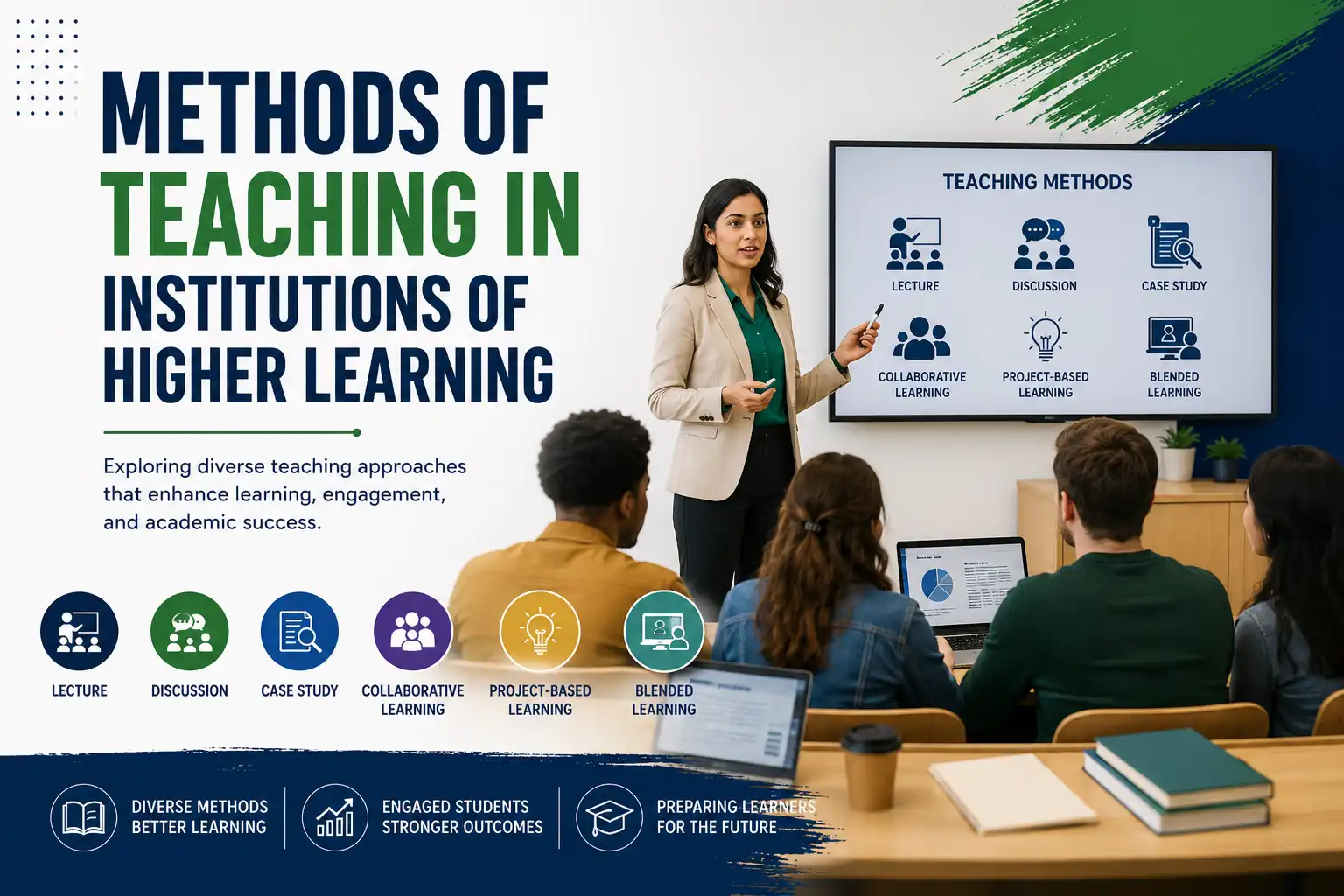
Methods of Teaching in Institutions of Higher Learning: Teaching methods are divided into two classes as teacher centred and learners centred. Teaching, as conventionally understood by a traditional teacher is the act of disseminating information to another individual or a group of individuals in the classroom. In this type, the teaching is focussed on narration by the teacher and on the part of learners’ listening, retention and recall. The teaching environment is very much formalized and the teacher occupies central position in the classroom. Here the learners acquire knowledge or information with practically an opportunity to develop understanding, application and skills. They know the information but they cannot correlate this to the daily life situations. This method also fails to draw the total attention of the learner towards learner’s abilities. Hence there arose the need for new methods, strategies and techniques that are suitably and effectively used in modem days.

TEACHING STRATEGIES
Teaching strategies can be classified under the following two heads:
a. Autocratic style:
- Lecture
- Lesson demonstration
- Tutorials
- Programmed instruction
b. Permissive style:
- Question-Answer
- Heuristics
- Projects
- Review
- Group discussion
- Role-playing
- Assignment
- Discovery
- Computer assisted instruction
- Brain storming
- Independent study
DIFFERENT METHODS OF TEACHING
- Discussion/Debates
- Cooperative Teaching
- Collaborative Work
- Problem-Based Learning (PBL)
- Heuristic Method (Problem solving)
- Case Study Method
- Demonstration Method
- Inductive Method
- Deductive Method
- Analytical Method
- Synthetic Method
- Verbal or Oral Method
- Written Method
- Laboratory Method
- Practical Methods
- Explanatory Method
- Activity-oriented Method
- Designing and Presenting aProject
- E-Learning

OFF LINE VS. ONLINE METHODS (SWAYAM, SWAYAMPRABHA, MOOCS ETC.)
In offline teaching and learning, students are able to interact with their teachers and peers
face-to-face. Online teaching and learning is the newest and most popular form of distance
education today. Online learning is education that takes place over the Internet. It is often
referred to as “e-learning” among other terms.
ADVANTAGES OF OFFLINE METHODS OF TEACHING
- Basically, the classroom environment is important to encourage and motivate collaborative learning.
- Collaborative learning increases student’s selfawareness about how students learn and enables them to learn more easily and effectively, transforming them into keen learners inside and beyond the classroom
- When students are in a classroom, they learn social interactions with peers, make friends, and also establish rapport with teachers. It is vital for children to develop socially along with their academic education
- Classroom teaching inculcates conflict resolving skills, presentation skills when it comes to presenting their ideas confidently in front of peers, develops team spirit, and teaches them to get along with those from different cultural backgrounds
- The presence of a teacher physically in a classroom keeps the students attentive and inspired throughout the lecture, and additionally also initiates participation in interesting activities. This enables students to retain more from what they have learned during a session.
ADVANTAGES OF ONLINE METHODS OF TEACHING
There are many benefits of online learning like flexibility of time; plenty of choices; cost benefits; comfortable environment to study; career advancement study even while working, gaining skills that are transferable; no necessity of commuting; and learning at home. Online method offers advantages to teachers as well as learners.
Teaching online offers instructors more options for engaging in instructional activities. • Online faculties have more flexibility in teaching during nontraditional class times. • They can also teach anywhere they have access to the Internet. • Some examples include teaching from home or while traveling to a conference
At the same time, the online environment attracts students who are self-motivated and more likely to initiate conversations, pose questions, and collaborate with their peers and instructor.
KEY E-LEARNING INITIATIVES RUN BY MHRD


1. What are the Methods of Teaching in Institutions of Higher Learning?
Methods of Teaching in Institutions of Higher Learning refer to the different strategies and techniques used by teachers to deliver knowledge effectively. These methods include lecture, discussion, problem-based learning, demonstration, collaborative learning, e-learning, laboratory methods, and activity-oriented teaching.
2. What are the two main categories of Methods of Teaching in Institutions of Higher Learning?
The Methods of Teaching in Institutions of Higher Learning are mainly divided into two categories: teacher-centred methods and learner-centred methods. Teacher-centred methods focus on lectures and direct instruction, while learner-centred methods encourage participation, discussion, projects, and independent learning.
3. Why are learner-centred Methods of Teaching in Institutions of Higher Learning important?
Learner-centred Methods of Teaching in Institutions of Higher Learning help students develop critical thinking, problem-solving ability, communication skills, creativity, and practical understanding. These methods also improve student engagement and make learning more interactive and effective.
4. What is the difference between offline and online Methods of Teaching in Institutions of Higher Learning?
Offline teaching involves face-to-face classroom interaction between teachers and students, whereas online teaching uses internet-based platforms like SWAYAM, MOOCs, and e-learning systems. Both Methods of Teaching in Institutions of Higher Learning have unique advantages such as social interaction in offline learning and flexibility in online learning.
5. Which modern Methods of Teaching in Institutions of Higher Learning are most effective today?
Some of the most effective modern Methods of Teaching in Institutions of Higher Learning include Problem-Based Learning (PBL), collaborative learning, case study method, computer-assisted instruction, brainstorming, and e-learning. These methods improve practical understanding and encourage active participation among students.